
How to Remove Detergent Stains From Clothes
To remove detergent stains from clothes, rinse the affected area with water at a temperature safe for the fabric, gently work the residue out with your fingers, and rewash the garment if needed. For stubborn marks, soak the clothing according to its care label, rinse thoroughly, and check that the stain is gone before using the dryer.
Laundry detergent is designed to clean clothes, but concentrated liquid detergent, undissolved powder, and excess product can sometimes leave white streaks, blue spots, or a waxy film. These marks are especially noticeable on black shirts, dark jeans, leggings, and other colored garments.
The good news is that most detergent residue can be removed with careful rinsing and rewashing. You usually do not need harsh chemicals or aggressive scrubbing. The right method depends on the type of detergent, the fabric, and how the mark appeared.
Quick Answer: How to Get Detergent Stains Out of Clothes
Follow these steps to remove laundry detergent stains without damaging your clothes:
Check the garment's care label to determine which water temperature is safe.
Rinse the stained area to loosen visible detergent residue.
Soak the garment in suitable water if the residue remains.
Gently rub the affected fabric against itself to help release the buildup.
Rinse thoroughly and check whether the mark has disappeared.
Rewash the garment using the correct amount of detergent and a suitable wash cycle.
Air-dry the item until you confirm the residue is gone.
Avoid aggressive scrubbing, excessive bleach, and unnecessary cleaning products. Delicate fabrics such as wool and silk may need special treatment rather than a standard soaking method.
Why Does Laundry Detergent Stain Clothes?
Laundry detergent stains usually occur when detergent does not dissolve, disperse, or rinse away properly. Instead of leaving the garment clean, the product can remain on the fibers and create visible marks.
Several factors can contribute to the problem.
1. Using Too Much Detergent
Adding more detergent than recommended does not automatically make clothes cleaner. Excess product can be difficult to rinse away, especially when the washing machine is overloaded.
The remaining detergent may leave white streaks, a slippery film, or stiff patches on clothing.
How to fix it: Rinse the affected area and rewash the garment with the amount of detergent recommended for the load. If the clothing is already clean, an appropriate rinse cycle may be enough.
2. Adding Detergent Directly to Clothes
Pouring concentrated liquid detergent directly onto dry fabric can create a concentrated spot before the product has a chance to disperse in the wash water.
This is one reason liquid detergent stains on clothes may appear as blue, greenish, or translucent marks.
How to fix it: Rinse the affected area and gently work out the residue. In future loads, add detergent to the designated dispenser or follow the washing machine manufacturer's instructions.
3. Powdered Detergent Not Dissolving Completely
Powdered detergent may leave pale streaks when it does not dissolve properly. This can happen when the water temperature is unsuitable for the product, the load is too large, or the water contains minerals that contribute to residue.
White marks may be difficult to see on white clothing but stand out clearly on black or navy fabric.
How to fix it: Rinse the residue, then rewash the garment. If the problem keeps happening, check the detergent instructions, water conditions, and washer loading recommendations.
4. Overloading the Washing Machine
Clothes need room to move during the wash and rinse cycles. When a washer is packed too tightly, water and detergent may not circulate effectively.
This can leave residue trapped in folds, seams, and thicker sections of fabric.
How to fix it: Remove some garments and rewash the affected items in a smaller load. Leave enough room for the clothes to move according to the machine's instructions.
5. Hard Water and Mineral Buildup
Hard water contains dissolved minerals, particularly calcium and magnesium. Depending on the detergent and washing conditions, these minerals can contribute to deposits or residue on fabrics.
If detergent marks appear repeatedly, especially when using powdered detergent, your water supply may be part of the problem.
How to fix it: Review your detergent's instructions for hard-water conditions. A detergent formulated for your water type or a compatible laundry water conditioner may help. Avoid adding cleaning chemicals without checking product compatibility.
6. Mixing Up Detergent and Fabric Softener Stains
Not every mark that appears after washing comes from detergent.
Fabric softener can leave oily or waxy-looking spots when it comes into direct contact with clothing or is not properly diluted. These marks may need a different treatment from ordinary detergent residue.
How to fix it: If the mark feels greasy or waxy, check whether fabric softener was used. Follow the garment's care label and choose a pretreatment suitable for the fabric and the suspected residue.
How to Remove Detergent Stains From Clothes Step by Step
For most washable garments, the safest starting point is water, gentle handling, and a thorough rinse. Work through these steps before trying stronger treatments.
Step 1: Identify the Type of Mark
Look closely at the affected area.
White or chalky streaks: These may be undissolved powdered detergent or other residue.
Blue or colored spots: Concentrated liquid detergent or a colored laundry additive may be responsible.
Waxy or greasy patches: Fabric softener or another oily substance may be the cause.
Stiff or rough areas: Detergent buildup or incomplete rinsing may be contributing.
These clues are helpful, but they do not identify every stain with certainty. If the fabric has changed color or texture, the mark may involve damage rather than removable residue.
Step 2: Check the Care Label
Before applying water or a cleaning product, check the garment's washing instructions.
Cotton T-shirts, polyester workout clothes, wool sweaters, silk blouses, and embellished garments do not all tolerate the same treatments.
If the label requires dry cleaning or a special cleaning method, do not assume that soaking is safe. For valuable or delicate garments, professional cleaning may be the better choice.
Step 3: Rinse the Affected Area
Hold the stained area under running water at a temperature permitted by the care label.
Allow the water to pass through the fabric and help loosen the detergent residue. For a small mark, concentrate on the affected area rather than soaking the entire garment immediately.
Avoid using very hot water simply because the mark looks stubborn. The correct temperature depends on the fabric and the type of residue.
Step 4: Gently Work Out the Residue
For sturdy, washable fabrics, gently rub the affected area against itself while it is wet. This can help release residue from the fibers.
Do not scrub aggressively with a stiff brush, twist the fabric forcefully, or stretch the affected area. These actions may damage fibers, distort the garment, or create a faded-looking patch on dark clothing.
For delicate materials, use the gentlest method permitted by the care label.
Step 5: Soak if the Mark Remains
If rinsing alone does not remove the mark, soak the garment in water at a temperature suitable for the fabric.
Follow any product-specific instructions if you use a laundry pretreatment. You do not necessarily need to add more detergent, particularly when excess detergent is the likely cause.
Do not leave delicate garments soaking for long periods unless their care instructions permit it.
Step 6: Rinse Thoroughly
After soaking, rinse the garment until the visible residue and slippery feel have gone.
Pay attention to seams, cuffs, collars, pockets, and folds where detergent can collect.
If the mark remains, repeat the rinse or compatible treatment rather than increasing the temperature or scrubbing harder.
Step 7: Rewash if Necessary
If the garment still shows detergent residue, return it to the washing machine.
Use an appropriate cycle, avoid overloading the drum, and measure detergent according to the product instructions. If the item is already clean and the main issue is excess detergent, an extra rinse or rinse-only cycle may be sufficient.
Step 8: Air-Dry and Inspect
Let the garment air-dry while you confirm whether the mark has disappeared. This makes it easier to inspect the fabric without exposing a remaining stain to unnecessary dryer heat.
If the mark persists after repeated gentle treatment, stop before using stronger chemicals that could damage the material.
How to Remove White Detergent Marks From Dark Clothes
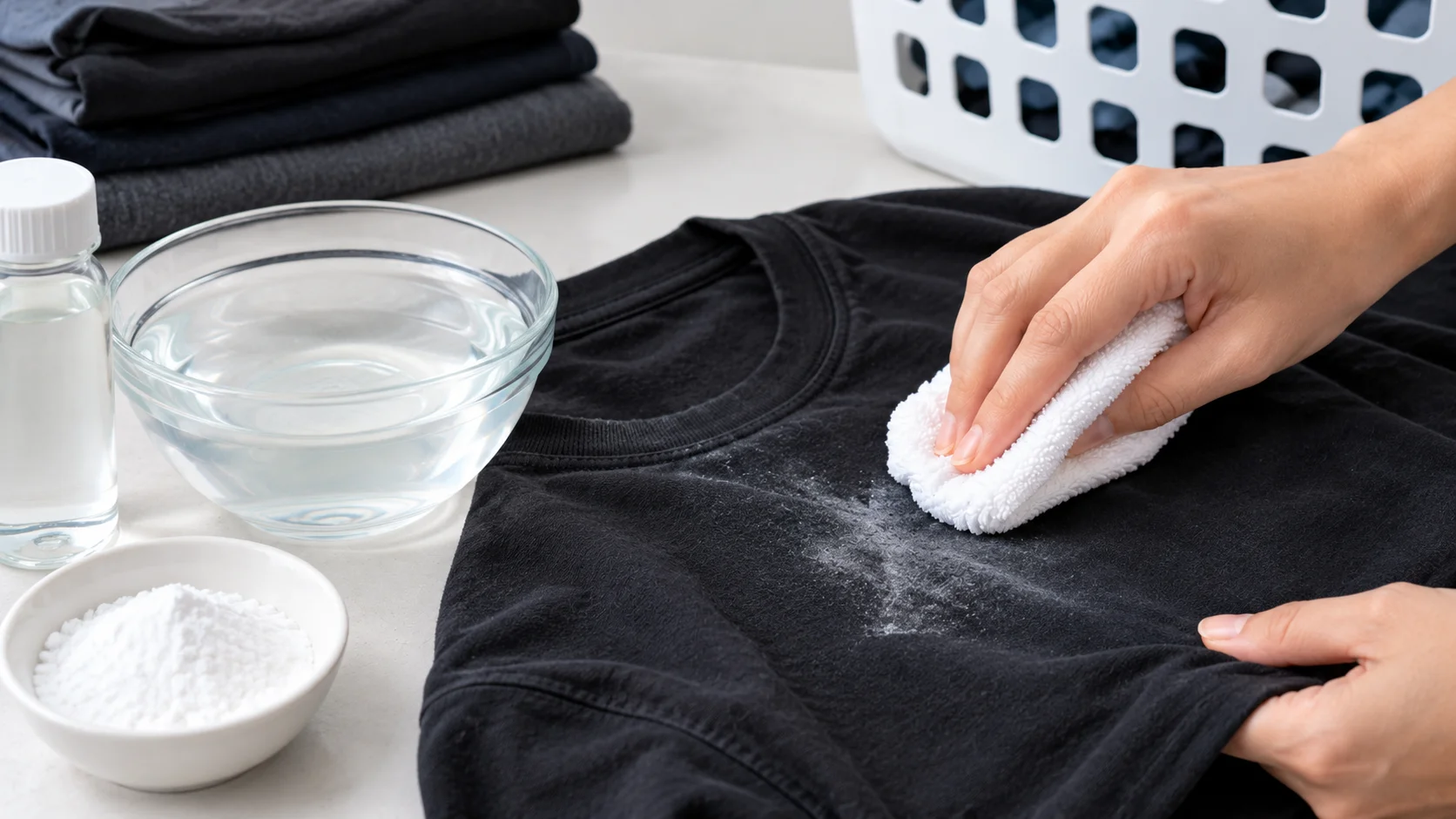
White detergent marks on dark clothes are particularly frustrating because even a small streak can stand out against black, navy, or charcoal fabric.
The marks often result from undissolved powder, excess detergent, or residue that has not rinsed away properly.
Use this method for washable dark garments.
Turn the garment inside out if doing so makes the affected area easier to handle.
Rinse the marked section with water at a fabric-safe temperature.
Gently work the fabric against itself to loosen the residue.
Soak the garment if necessary and permitted by the care label.
Rewash dark clothing separately, using the correct detergent amount.
Use an additional rinse if the machine offers one and residue remains.
Air-dry and inspect the garment before using the dryer.
How to Protect Dark Fabric While Removing Residue
Dark dyes can be sensitive to harsh cleaning products and excessive friction. Avoid chlorine bleach, aggressive brushing, and untested stain removers.
If you plan to use a pretreatment, test it on a hidden area first and follow the product's instructions.
Do not assume that every white mark is detergent. Deodorant, fabric softener, lint, mineral deposits, and actual color loss can look similar.
If a mark remains after the residue has been removed, the fabric itself may have changed color. Further washing may not restore the original shade.
How to Remove Liquid Detergent Stains on Clothes
Liquid detergent can leave concentrated spots when it touches clothing before being diluted. Colored detergent may also leave blue or greenish marks.
To treat a suspected liquid detergent stain:
Rinse the affected area with water suitable for the fabric.
Gently loosen the residue without rubbing harshly.
If necessary, soak the garment according to its care label.
Apply a suitable laundry pretreatment only if the mark persists and the product is compatible with the material.
Rinse thoroughly.
Rewash the garment if needed and inspect it before drying.
For many fresh liquid detergent marks, rinsing and rewashing are sufficient. Avoid applying additional concentrated detergent to the spot unless the product specifically recommends it as a pretreatment.
If the mark does not improve, consider whether the discoloration comes from the detergent's dye, another laundry additive, or damage to the fabric.
How to Remove Detergent Residue From Clothes Without Vinegar
You do not need vinegar to remove every detergent stain. In many cases, plain water and a suitable rinse are the best first steps.
Try this approach:
Rinse the affected area using a fabric-safe water temperature.
Gently loosen the residue with your fingers.
Soak the garment if the care label allows it.
Rewash using the correct cycle and detergent dosage.
Add an extra rinse if the residue remains and the machine supports that option.
For a stubborn mark, use a compatible laundry pretreatment according to its label. Test the product on an inconspicuous area first.
Avoid combining vinegar with chlorine bleach or other cleaning products. Mixing household chemicals can create hazardous reactions, and vinegar is not suitable for every fabric or appliance.
Can You Remove Detergent Stains After Clothes Have Dried?
Yes, detergent residue may still be removable after a garment has dried. The result depends on the type of residue, the fabric, and whether the garment has been exposed to repeated high heat.
Start by dampening the affected area with water at a temperature allowed by the care label. Gently work the fabric to loosen the mark, then rinse thoroughly.
If the residue remains, soak and rewash the garment using a suitable method. Air-dry it and inspect the result.
If the item has already gone through a hot dryer, do not assume that the remaining mark is still detergent. Heat or repeated washing may have caused a color or texture change that requires a different approach.
How to Prevent Detergent Stains on Clothes
The easiest way to avoid detergent marks is to help the product dissolve and rinse away properly during every wash.
1. Measure Detergent Correctly
Follow the detergent label and the washing machine's instructions. The amount needed can vary depending on the product, load size, soil level, and water conditions.
Avoid pouring detergent into the cap by guesswork. Concentrated detergents may require less product than you expect.
For more guidance, read College Laundry's existing article on avoiding common laundry mistakes that shorten clothing life.
2. Add Detergent the Right Way
Use the designated detergent dispenser or follow the washer manufacturer's instructions.
Do not pour concentrated liquid detergent directly onto dry garments unless the product explicitly instructs you to use it that way.
For powdered detergent, follow the package and appliance directions to help ensure proper dissolution.
3. Avoid Overloading the Washer
Leave enough space for garments to move during the wash and rinse cycles. If the load is too large, divide it into smaller loads.
This is especially important for towels, hoodies, bedding, and other bulky items that can restrict movement.
4. Choose the Right Water Temperature
Cold water works well for many everyday laundry loads, but the best temperature depends on the detergent, fabric, and soil level.
Check whether your detergent is formulated for cold-water washing. If powder repeatedly leaves marks, review the product instructions and consider whether a compatible liquid detergent works better for your laundry conditions.
Always follow the care label.
5. Sort Clothes by Color and Fabric
Wash dark clothing with similar colors and fabrics. This helps prevent color transfer and makes it easier to select an appropriate cycle.
Avoid mixing a tightly packed load of heavy towels with delicate clothing that needs a gentler wash.
6. Use an Extra Rinse When Needed
If your clothes frequently feel slippery, stiff, or coated after washing, an additional rinse may help remove remaining detergent.
However, an extra rinse is not a substitute for measuring detergent correctly or avoiding an overloaded machine.
7. Clean the Washing Machine Regularly
Detergent and soil can build up in the washer's dispenser, drum, and other accessible areas.
Follow the manufacturer's cleaning instructions. If residue continues to appear across multiple loads, inspect the detergent dispenser, check the water supply conditions, and review the washer's loading and rinse settings.
8. Check Clothes Before Drying
Inspect dark garments for white streaks and look for concentrated spots on lighter clothing.
If a mark remains, treat it before drying. This gives you an opportunity to remove the residue without exposing the garment to unnecessary heat.
Detergent Stains vs. Other Laundry Marks
Not every mark that appears after a wash cycle is caused by detergent. Identifying the likely cause can help you avoid the wrong treatment.
These are clues rather than definitive diagnoses. If the fabric has become faded, rough, or damaged, additional cleaning may not restore it.
A Fabric-Safety Checklist Before Treating Detergent Stains
Before trying to remove detergent marks, check the following:
Read the garment's care label.
Identify whether the mark is likely detergent, fabric softener, or another substance.
Start with a gentle rinse.
Test any pretreatment on a hidden area first.
Avoid aggressive scrubbing and excessive heat.
Do not mix cleaning chemicals.
Rewash only when necessary and use the correct detergent amount.
Inspect the garment before machine drying.
Stop if the fabric changes color, texture, or shape.
For silk, wool, embellished clothing, and other delicate items, follow the specific care instructions rather than applying a standard treatment automatically.
Final Thoughts
Detergent marks do not always mean your clothes are permanently stained. In many cases, the problem comes from excess product, undissolved powder, or residue that has not rinsed away.
Start with a gentle rinse, use water suitable for the fabric, and soak or rewash the garment if needed. Avoid harsh chemicals and aggressive scrubbing, particularly on dark or delicate clothing.
Prevent future marks by measuring detergent correctly, avoiding overloaded loads, choosing appropriate wash settings, and checking clothes before drying.
For students, families, and busy professionals, College Laundry can also help make laundry day more convenient. Explore the available laundry pickup and delivery services in Charleston, South Carolina, to spend less time managing everyday laundry.
Frequently Asked Questions
How do you remove detergent stains from clothes quickly?
Rinse the affected area with water at a temperature safe for the fabric, gently loosen the residue, and rinse again. If the mark remains, soak and rewash the garment as directed by its care label. Check the result before drying.
Why do my clothes have white marks after washing?
White marks may come from undissolved powdered detergent, excess detergent, mineral deposits, or incomplete rinsing. Overloading the washer can contribute to the problem. Review your detergent dosage, water conditions, and loading practices.
How do you remove white detergent marks from black clothes?
Rinse the marked area, gently work the fabric to release the residue, and rewash the garment with dark clothing using the recommended amount of detergent. Avoid bleach and harsh scrubbing, which can damage dark fabric.
Can liquid laundry detergent leave stains?
Yes. Concentrated liquid detergent can leave visible spots when it comes into direct contact with fabric and does not disperse or rinse away properly. Rinsing the area and rewashing the garment often helps remove the residue.
Will detergent stains come out after drying?
They may. Dampen the area, gently loosen the residue, and rinse or rewash the garment using a fabric-safe method. However, if heat has contributed to discoloration or damage, the original appearance may not be fully restored.