How to Wash Gym Clothes and Remove Sweat Odor
Gym clothes can look clean after washing and still develop a sweaty smell when you wear them again. The solution is to remove sweat and body-oil buildup, wash athletic fabrics correctly, and dry them completely before storing them.
Knowing how to wash sweaty workout clothes properly helps prevent recurring odors, protects moisture-wicking fabrics, and keeps your favorite athletic gear in good condition. Turn garments inside out, use the right amount of detergent, choose a wash cycle that matches the care label, and avoid unnecessary fabric softener on performance wear.
Whether you wear workout leggings, running shirts, sports bras, gym shorts, or moisture-wicking tops, following the best way to wash athletic wear can help keep your clothing fresh and extend its useful life.
Why Do Gym Clothes Trap Sweat Odor?
Workout clothing is designed to handle movement, moisture, and repeated wear. However, the same fabrics that make athletic gear comfortable can also make persistent odors difficult to remove.
Polyester, nylon, and spandex are common in athletic wear. These synthetic fibers can retain body oils and odor-causing compounds, especially when garments are worn frequently or washed incorrectly.
Several laundry habits can make the problem worse:
Leaving sweaty clothes in a gym bag: Trapped moisture and limited airflow allow unpleasant odors to develop.
Using too much detergent: Excess detergent can leave residue that interferes with effective rinsing.
Overloading the washer: Clothes need enough room to move through the wash cycle.
Using fabric softener unnecessarily: Some fabric softeners can leave deposits on technical fabrics and affect their intended performance.
Choosing the wrong wash settings: Excessive heat or an unsuitable cycle can damage elastic fibers and delicate construction.
Storing clothes before they are fully dry: Remaining moisture can contribute to musty odors.
Understanding these causes is the first step in learning how to prevent workout clothes from smelling after laundry day. The goal is not to make workout clothes smell strongly perfumed. It is to clean them thoroughly, remove residue, and prevent moisture from lingering.
How to Wash Gym Clothes Step by Step
The best way to wash gym clothes is to follow a routine that removes sweat and body oils without damaging stretch, shape, or moisture-wicking properties.
1. Take Workout Clothes Out of Your Gym Bag
Remove sweaty clothes as soon as you get home from the gym, a run, or a workout class.
Leaving damp leggings, socks, shirts, and sports bras inside a closed gym bag can encourage unpleasant odors. If you cannot start a wash immediately, hang the items separately in a well-ventilated area until they dry.
Do not leave damp workout gear crumpled in a hamper. Airing it out first is a practical way to reduce odor buildup while you wait for laundry day.
Also remember to empty and clean your gym bag regularly. A bag that retains sweat or moisture can transfer odors back to freshly washed clothes.
2. Sort Gym Clothes by Fabric and Soil Level
Before washing, separate delicate performance garments from items that need a different cleaning approach.
For example, keep heavily soiled workout clothes separate from lightly worn everyday shirts when practical. Separate items according to color and care instructions, too.
Check the garment labels for special instructions, particularly on compression clothing, sports bras, leggings, and technical running gear.
You do not necessarily need a separate load for every type of athletic clothing. The important thing is to avoid combining garments that require incompatible washing conditions.
3. Turn Clothes Inside Out
Turning workout clothes inside out exposes the areas that have the most direct contact with sweat and body oils.
This is particularly useful for:
Workout shirts and tank tops
Leggings and compression shorts
Sports bras
Running shorts
Socks
Athletic base layers
Pay attention to the underarms, waistband, collar, and back of shirts, where sweat and residue can accumulate.
If a garment has visible deodorant buildup or a particularly strong odor, pretreat the affected area with a fabric-safe laundry product before washing.
4. Choose the Best Detergent for Gym Clothes
Choosing the best detergent for gym clothes depends on the fabric, the type of soil, and the product's cleaning ingredients.
For workout clothing with persistent odors, consider a detergent formulated for athletic wear or one containing enzymes that help break down certain organic residues. Always check the product instructions and the garment's care label.
You do not need to use a large amount of detergent to get cleaner clothes. Follow the detergent manufacturer's dosage recommendations for your load size, soil level, and machine.
Using too much can leave residue on fabric, which may contribute to recurring odor problems.
A practical tip: If your gym clothes regularly smell clean at first but become unpleasant again when you start sweating, review your detergent amount, washing-machine cleanliness, and use of fabric softener before simply adding more detergent.
5. Select the Correct Water Temperature and Wash Cycle
Hot water is not automatically the best option for athletic clothing.
Many performance garments contain elastic fibers that can be affected by excessive heat. Cold or cool water may be appropriate for many synthetic workout clothes, while other garments may permit a warmer setting.
Always follow the manufacturer's care label.
For most washable activewear, a gentle or regular cycle appropriate to the garment is a reasonable starting point. Choose a cycle that provides adequate cleaning without unnecessary agitation or heat.
Avoid assuming that every garment should be washed in the same setting. A cotton gym T-shirt, compression legging, and a delicate sports bra may have different care requirements.
6. Avoid Overloading the Washing Machine
Workout clothes need enough space to move so that water and detergent can circulate through the load.
When the washer is packed too tightly, garments may not clean or rinse as effectively. This can leave sweat, body oils, and detergent residue behind.
Follow your washing machine's loading guidance and leave room for clothes to tumble or move freely.
If you have several days of workout clothing, washing smaller, suitable loads may be more effective than squeezing everything into one oversized load.
7. Skip Unnecessary Fabric Softener
Fabric softener is not always suitable for performance clothing.
Some athletic fabrics are engineered to wick moisture away from the skin. Softener residues may affect the way certain technical fabrics perform and can contribute to buildup over repeated washes.
If your gym clothes have started retaining odor, try washing them without liquid fabric softener and see whether your routine improves.
Do not automatically replace it with another additive. Correct detergent dosing, appropriate wash settings, and thorough drying are more important starting points.
8. Remove Clothes From the Washer Promptly
Once the cycle finishes, transfer your workout clothes to the dryer or drying rack as soon as practical.
Leaving damp garments sitting in a closed washer can contribute to musty odors. If laundry has been sitting long enough to smell unpleasant, inspect it and consider rewashing it before drying.
This step is easy to overlook, especially when you run laundry overnight or between classes, work, and gym sessions.
9. Dry Gym Clothes Completely
Proper drying is just as important as washing.
Check the garment label before choosing a dryer setting. Some athletic garments can be tumble-dried at a low temperature, while others are better suited to air-drying.
For air-drying, hang garments separately with adequate airflow. Avoid leaving wet leggings, shirts, or sports bras folded over one another in a damp room.
Before putting clothes away, make sure seams, waistbands, and thicker areas are completely dry.
Remember: If a garment still smells sweaty after washing, treat and wash it again as appropriate instead of relying on the dryer to remove the odor.
How to Remove Gym Clothes Odor When a Normal Wash Is Not Enough
If your workout clothing continues to smell after a regular wash, focus on the cause instead of repeatedly washing it with extra detergent. Knowing how to remove gym clothes odor starts with identifying whether the problem is sweat residue, detergent buildup, fabric-softener deposits, or a washing machine that needs cleaning.
Try the following process:
Check the care label: Identify the fabric and any restrictions on water temperature or cleaning products.
Turn the garment inside out: Expose the areas that collect sweat and body oils.
Pretreat the affected areas: Use a suitable laundry pretreatment according to its directions.
Rewash with the correct amount of detergent: Avoid overloading the machine and use an appropriate cycle.
Check the odor before drying: If the smell remains, consider another fabric-safe treatment and wash.
Dry thoroughly: Follow the garment's care instructions before storing it.
If you are wondering how to get sweat smell out of gym clothes, a laundry product designed for odor removal may help. Some washable garments may also tolerate a diluted distilled white vinegar soak, but check the fabric instructions first and follow reliable product guidance.
Never mix vinegar with chlorine bleach. Do not combine cleaning products unless their labels specifically indicate that doing so is safe.
For additional techniques focused specifically on stubborn odors, see College Laundry's guide: How to Get Sweat Smell Out of Clothes: 10 Proven Methods.
How to Wash Different Types of Athletic Wear
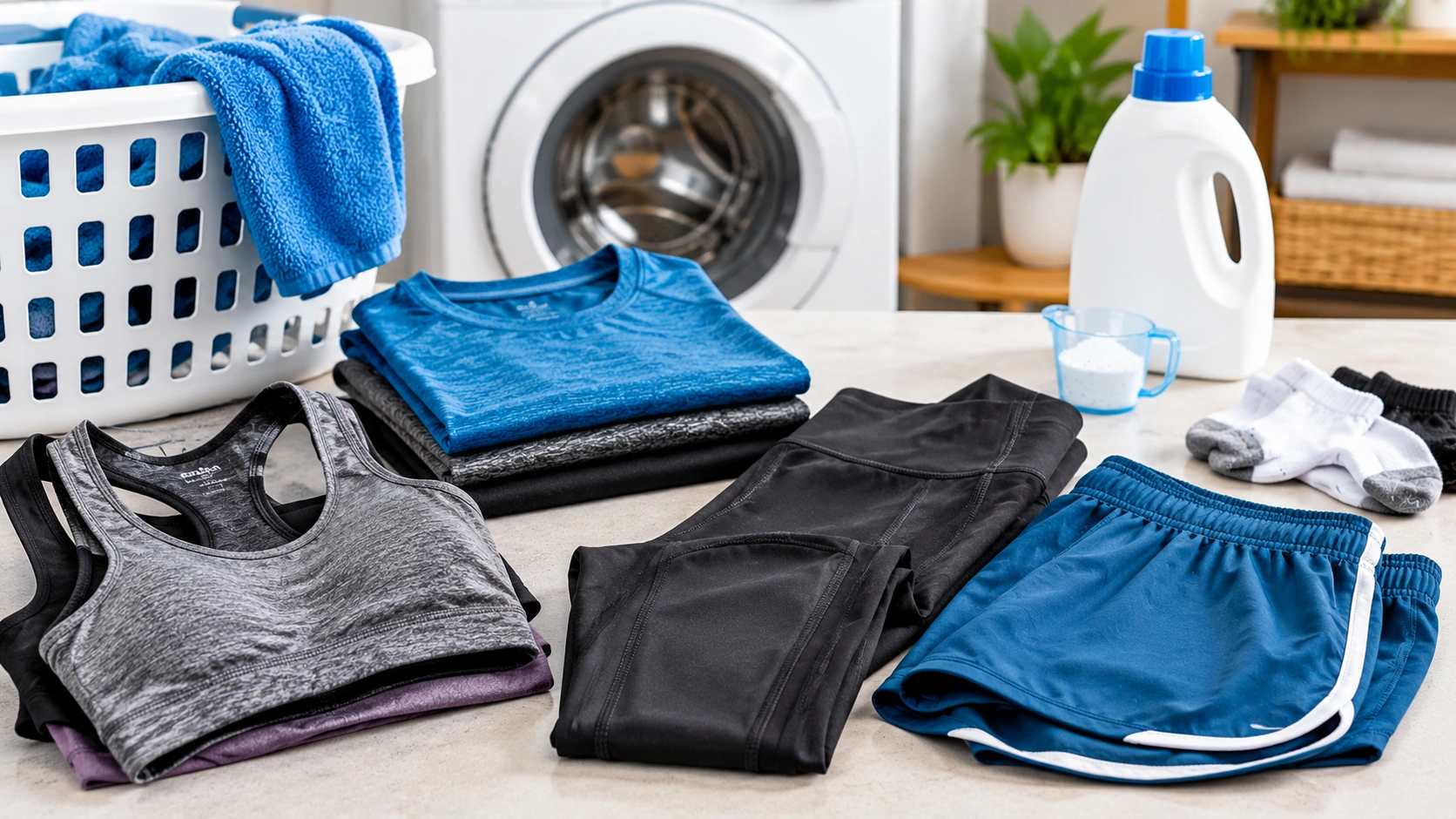
Not all workout clothes should be washed in the same way. The right approach depends on the fabric, garment construction, and care label.
Use this table as a starting point, not a substitute for the care label. Fabric blends and garment finishes can change the appropriate washing method.
How Often to Wash Workout Clothes
Understanding how often to wash workout clothes helps prevent sweat buildup and keeps athletic gear ready for your next session.
Most workout clothes should be washed after each workout, especially when they are visibly sweaty or damp. Wearing sweaty garments again without washing them can allow body oils, sweat residue, and odor to accumulate.
Use these general guidelines:
Workout shirts and tank tops: Wash after each workout.
Leggings and gym shorts: Wash after each workout, particularly after intense exercise.
Sports bras: Wash after each workout or according to the manufacturer's care instructions and how heavily they were worn.
Socks: Wash after each workout.
Lightly used warm-up layers: Follow the care label and assess whether the garment has absorbed sweat or developed odor.
If you exercise daily, keep enough clean workout clothing available to avoid rewearing damp or sweaty gear while waiting for laundry day.
For college students, planning a regular laundry day and keeping a ventilated place for damp gear can make this routine easier to maintain.
How to Prevent Workout Clothes From Smelling Between Washes
A few simple habits can make a noticeable difference in how fresh your athletic wear stays. The most effective way to prevent recurring odors is to combine proper washing with good moisture management and clean storage.
Air Out Clothes Immediately After Exercise
Take clothes out of your gym bag and hang them in an open, ventilated area if you cannot wash them immediately.
Letting damp garments air out is better than leaving them tightly packed in a bag or hamper.
Use the Right Amount of Detergent
Follow the product directions instead of adding extra detergent in an attempt to eliminate odor. Proper rinsing matters as much as cleaning.
Keep Your Washing Machine Clean
If several loads of clothing develop a musty or sour smell, the washing machine may be part of the problem.
Clean the drum, detergent dispenser, door seal, and other applicable components according to the manufacturer's instructions. Run the recommended maintenance cycle when needed.
For more help diagnosing this issue, read Why Do Clothes Smell After Washing? Causes, Fixes & Prevention Tips.
Store Clean Clothes Only When They Are Dry
Even freshly washed gym clothes can develop an unpleasant smell if they are folded or stored while damp.
Make sure garments are fully dry and keep them in a clean, dry storage area.
Wash Your Gym Bag Regularly
Sweat, damp towels, and used clothes can leave odors inside a gym bag. Follow the bag manufacturer's cleaning instructions and let it dry thoroughly before using it again.
Common Mistakes to Avoid When Washing Gym Clothes
Even a good detergent cannot compensate for a poor laundry routine. Avoid these common mistakes:
Leaving sweaty clothes in a closed gym bag for hours.
Putting all athletic fabrics through the same hot wash cycle.
Using more detergent than the product recommends.
Overloading the washing machine.
Using fabric softener on technical clothing without checking compatibility.
Leaving damp clothes in the washer after the cycle ends.
Drying clothes before checking whether the odor remains.
Folding or storing workout gear while it is still damp.
Ignoring a washing machine that repeatedly makes clothes smell musty.
Fixing these habits can help prevent recurring odors without relying on strong fragrances or harsh treatments.
When a Laundry Service Can Make Workout Laundry Easier
Keeping gym clothes clean can become difficult when you exercise several times a week, attend college, work long hours, or share laundry facilities.
A regular laundry routine helps, but it also takes time to sort, wash, dry, and fold clothes. A professional wash-and-fold service can make everyday laundry more manageable when your schedule is full.
College Laundry offers wash-and-fold laundry service for people who want to spend less time managing routine laundry. If you are in the Charleston, South Carolina, service area, check the available service details to see whether pickup or other options suit your needs.
For gyms and fitness facilities handling larger quantities of towels, uniforms, and workout gear, College Laundry also provides information about its laundry service for gyms.
Frequently Asked Questions
What Is the Best Way to Wash Gym Clothes?
The best way to wash gym clothes is to turn them inside out, use the recommended amount of suitable detergent, select the cycle and water temperature listed on the care label, and avoid overloading the washer. Remove clothes promptly and dry them completely.
How Do You Wash Sweaty Workout Clothes Without Leaving an Odor?
To wash sweaty workout clothes effectively, take damp garments out of your gym bag promptly, pretreat heavily affected areas when needed, and wash them with the correct amount of detergent. Avoid unnecessary fabric softener, check the odor before drying, and make sure the garments dry completely.
What Is the Best Detergent for Gym Clothes?
The best detergent for gym clothes is one that cleans effectively, suits the fabric, and rinses out properly. A detergent formulated for athletic wear or containing suitable enzymes can help with persistent odors. Using the correct amount is more important than simply adding extra detergent.
Should You Wash Gym Clothes in Hot or Cold Water?
Follow the garment's care label. Cold or cool water is appropriate for many synthetic athletic garments, while some other fabrics may tolerate warmer settings. Avoid excessive heat when caring for elastic or delicate performance clothing.
Can You Use Fabric Softener on Workout Clothes?
Check the garment's care instructions. Fabric softener can leave residue and may affect the intended moisture-wicking performance of some technical fabrics. If odor persists, try washing your activewear without it.
How Often Should You Wash Workout Clothes?
Wash most workout clothes after each workout, especially shirts, socks, leggings, and other items that become sweaty or damp. Follow the manufacturer's care instructions for individual garments.
How Do You Get Sweat Smells Out of Gym Clothes?
To get sweat smell out of gym clothes, turn the garments inside out, pretreat odor-prone areas with a suitable laundry product, and rewash using the correct detergent amount. Check the smell before drying and investigate your washing machine if the problem keeps returning.
Why Do My Gym Clothes Smell Even After Washing?
Common causes include body-oil buildup, synthetic fabrics that retain odor compounds, too much detergent, fabric-softener residue, an overloaded washer, or a washing machine that needs cleaning. Review your washing and drying routine before trying stronger treatments.
How Do You Wash Activewear Properly Without Damaging It?
To wash activewear properly, read the care label, turn garments inside out, use a suitable detergent, select an appropriate cycle, avoid excessive heat, and follow the manufacturer's drying instructions. Use a gentle cycle when directed, especially for delicate garments and sports bras.
Can You Leave Sweaty Gym Clothes in a Laundry Basket Overnight?
Avoid leaving damp clothes crumpled in a closed hamper overnight. If you cannot wash them promptly, hang them in a ventilated area until they dry, then store them separately from clean clothes until laundry day.
Final Thoughts
The best way to wash gym clothes is to remove sweat and body-oil buildup without leaving excess detergent, moisture, or fabric-softener residue behind.
Take workout gear out of your gym bag promptly, turn garments inside out, use the right detergent amount, follow the care label, and dry clothes completely before putting them away. If odors persist, pretreat the affected areas and review your washing machine and laundry habits.
By following these steps, you can prevent workout clothes from smelling, protect athletic fabrics, and keep your workout gear ready for the next session. For students and busy professionals, building a consistent routine can make athletic clothing easier to maintain. When everyday laundry becomes difficult to manage, College Laundry's wash-and-fold service may help simplify the process.